TrueStory Biz_storytelling team building, inside your company
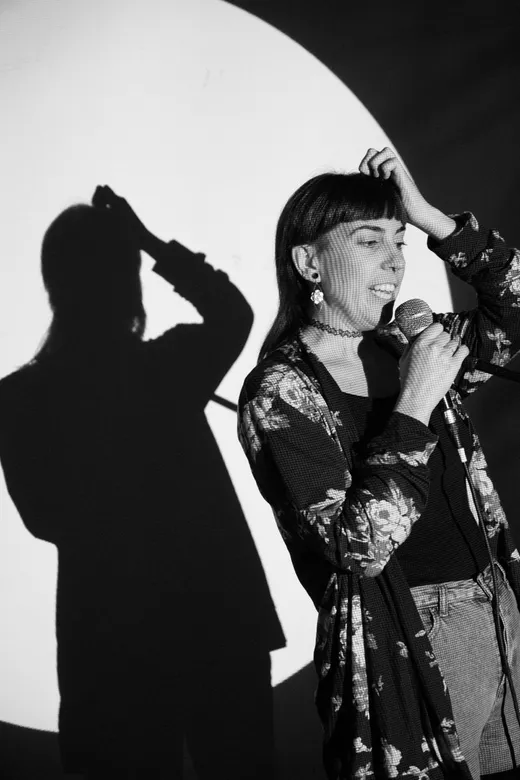
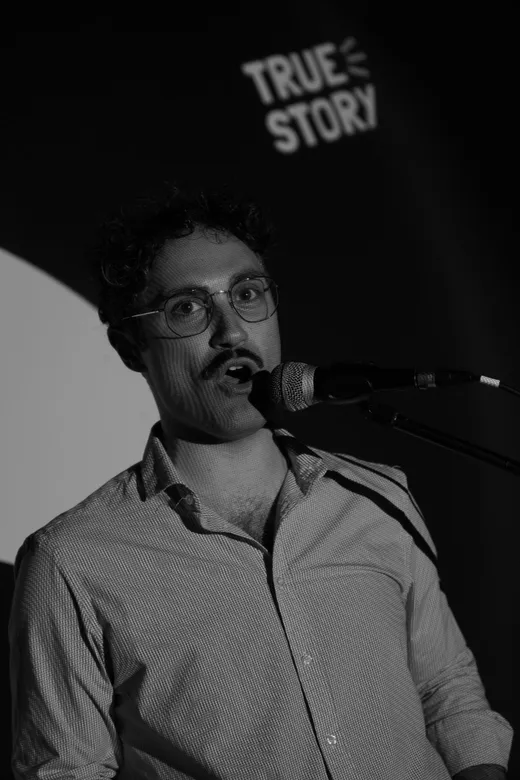
It’s team building: people on your team tell a true story, six minutes each, in front of their colleagues. Nobody prepares beforehand: the evening opens with a short masterclass, then a host takes over. Nothing is recorded, and the rules are the same for whoever runs the company and whoever joined last month. The next day people talk to each other differently.
price
quoted within 48 hours
formats
Evening, Day or Series
the evening
three to four hours
where
at your place, a venue chosen together or an external location
They’ve worked together for years, but that evening they’ll get to know each other as never before.
At work everyone knows who does what, not who people are. Six minutes are enough to see a colleague outside their role.
The team grew fast, and the new people haven’t found their place yet?
An evening like this puts them in the room with everyone else, as equals. Someone who joined a month ago gets the same six minutes as someone who’s been there forever.
Every year the company dinner, and every year the same tables?
The people sitting together already know each other. Here the whole room listens, and whoever wants to speaks.
what countsthat whoever runs the company also gets up to tell a story, under the same rules as everyone else.
How an evening works_
The format is the one from the public TRUE STORY evenings, brought inside your company. In the Day and the Series, there’s also a storytelling session before the evening.
Someone who has heard a colleague’s story writes to them differently the next day. It happens in one evening.
With the Series come two tools as well, to make what happened in the room last.
The kit for new arrivals
A way to welcome new people by having them tell a story, under the same rules as the evening. Whoever joins the company finds a place, instead of waiting to earn one.
What the kit looks like
a shorter version of the evening, for a group of new hires
the rules, to read beforehand
how to choose and tell a story in six minutes
who runs it, and how
For example: new people join several departments in September. Instead of the usual round of introductions, each of them tells a six-minute story to their department, under the rules in the kit. From that day, the department knows who they are.
The report after each day
An account for you of how it went and what to suggest for the next day. The stories aren’t in it: they belong to the people who told them.
What the report says
who took part, and how
what worked and what didn’t
what to suggest for the next day
never the content of the stories
If on the first day almost only the managers told stories, the report points it out, and on the next day the storytelling session starts from the departments that stayed in the audience.
In every format
The evening
Three or four hours your team remembers because they lived them in the room, and that nobody recorded.
The masterclass
It opens every evening. Knowing how to choose a story and how to listen also helps in meetings and on the phone.
What does it cost?
Quoted within 48 hours. It depends on how many people, the venue and the format.
Half an hour on a call, usually with Davide: we choose together the format that suits your team.
The formats
Evening, Day or Series. We usually recommend the Day.
What’s included
The host, the masterclass that opens the evening and coordination with the venue. In the Day and the Series, the storytelling session too; in the Series, the report and the kit for new arrivals.
Where
At your place, in a venue chosen together or at an external location. All you need is a room where people can listen.
Questions about TrueStory Biz_
Do people who don’t want to tell a story have to?
No. Whoever wants to tell a story gets up, whoever wants to listen listens. The evening works that way too: a room that listens is part of the format.
Does it work with a team in conflict?
Yes. On stage the rules are the same for everyone, six minutes each, with no hierarchy. One evening doesn’t resolve the conflict, but the next day people start talking to each other again.
For how many people?
From about ten upwards. With larger groups we split the evening into several rounds, so everyone can listen.
Do you record anything?
No, no audio and no video. It’s the TRUE STORY rule, and inside a company it matters even more: people only tell a story for real when they know it stays in the room.